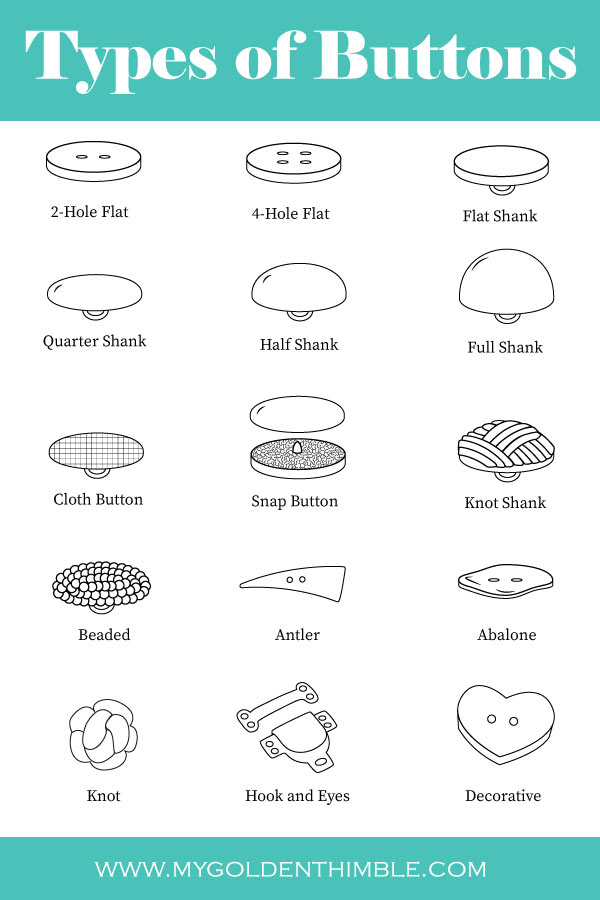
In this post, you will find illustrations and pictures of the most common (and odd) types of buttons out there.
The most famous notion in sewing is finally explained in one single post.
Firstly, learn how to pick them, where to use them, and lastly, how to measure them. Because no, they are not measured in inches or millimeters!
NOTE: This post contains affiliate links, which means that if you make a purchase using one of the links in this article, I may earn a commission at no extra cost to you (To know more about this, click here.)
I find the history of clothing amazing. Similarly, I enjoy learning where objects come from.
It is so interesting for me to learn about where the clothes came from and why they are as they are.
You can always find me devouring books on the history of garments and visiting every museum exhibit with traditional garments.
I own a lot of sewing and pattern-making books and also a lot of informational ones.
In my book, The Dictionary of Fashion, I can find all kinds of interesting, fun facts about clothes.
For example,
Small History of Buttons
Did you know that buttons were first used as trimmings in addition to decorative notions?
It wasn’t until the late 14th century that they actually became functional in clothing.
By the 16th century, all types of buttons were used in both garments and accessories.
It is hard to imagine life without buttons, isn’t it?
If you think that buttoning up your dress shirts is hard, just imagine what must have been lacing up a corset on and off each day.
No, thank you!
And, of course, now we can sew zippers into any of our clothes and have it closed in just one move.
But buttons have become more than a closure tool.
In conclusion, they are an essential element of design.

Most importantly, even if you wanted to. There is no way you could avoid them.
That is why every person (not only seamstresses) needs to learn how to properly sew on a button.
It is a life skill! And why?
Because every one of us owns at least one garment that needs buttoning.
There are a lot of types of pants that have them. Not to mention the classic shirts and blouses.
As a seamstress or a designer, I can imagine that you already know this too well.
But today, we are here not to learn the whys but the whats.
I want to present you with your online to-go button guide. It covers everything about buttons, from type to material to size.
Ready to learn all about it?
Keep reading!
Types of Buttons: Styles
1. Flat Buttons

These are the most common types of buttons you can find there.
Flat buttons come in all sorts of different shapes (when they are decorative) and sizes.
Their main characteristic is that they have holes in the center of the piece, so you can pass the thread and needle through those holes to sew the button over your fabric.
You will find them with either two or four holes.
The ones with two holes in them are commonly used on informal or casual clothes or projects such as cardigans and blouses.
Four-hole buttons are mostly used in smaller to medium sizes on formalwear garments such as men’s shirts or pants.
There is a crossing reference on flat buttons, as you can find it without holes through their body but rather with a shank on the back of them.
2. Shank Buttons

Shank Buttons are the second most common type of button.
This has a small loop made of the same material as the button, which is placed on the back of it to be sewn into a garment.
Thanks to the shank, these buttons can hold and keep in their place heavier layers of fabrics.
That is why you will mostly find them on denim jackets or wool coats.
Although, that is not the rule. Nowadays, you can find shank buttons on all sorts of garments.
For example, they are often used as a closure on the back of neckline blouses. Thanks to the height of the shank, a ribbon loop can easily be wrapped around it to work as a closure and be kept in place.
Shank buttons come in all sorts of sizes, but they are usually found with four roundness heights: flat, quarter, half-shank, and full shank.
3. Cloth

A cloth button is made out of two pieces made either of plastic or metal that can hold a little piece of fabric between them when you put them together.
This allows you to cover the button to match the fabric of your project.
It has a round bubble finish on the top and a shank on the back.
4. Snap buttons

This metal or plastic fastener is made out of two pieces that interlock with each other to close a garment or project.
It needs a special tool to attach it to the fabric, but you can find the buttons with a kit that includes this tool. Therefore you won’t need to buy it separately.
Commonly found on baby’s clothes.
5. Hook and Eye
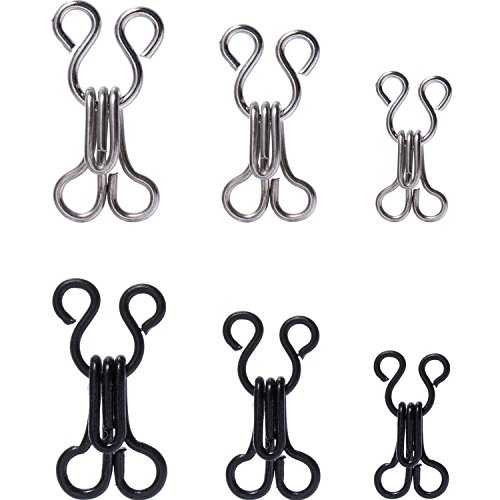
The hook and eye is a closure that uses a small metal hook on one side and a small loop or bar on the other side.
It is used for clothes that need to be opened to be put on, for example, skirts, waists, and dresses with back closings.
You can sew them at the end of the zippers to make them easier to zip up.
6. Knot
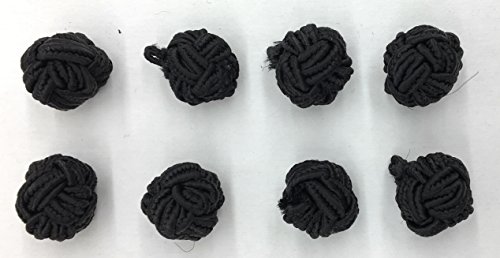
This button is also known as a Chinese knot, and it takes the form of the basic knots used in Chinese macrame.
Now, you can use them mostly as a decorative element, but also as buttons.
You can make these buttons by hand with a paracord cord.
7. Knot Shank
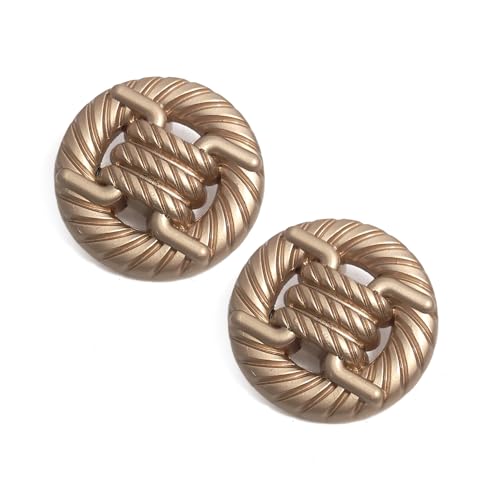
A knot shank is a flat shank button that has a fake bound knot on top. That is to say, the knot can be molded in materials like metal or be a mock-up with strings.
8. Beaded/ Rhinestone
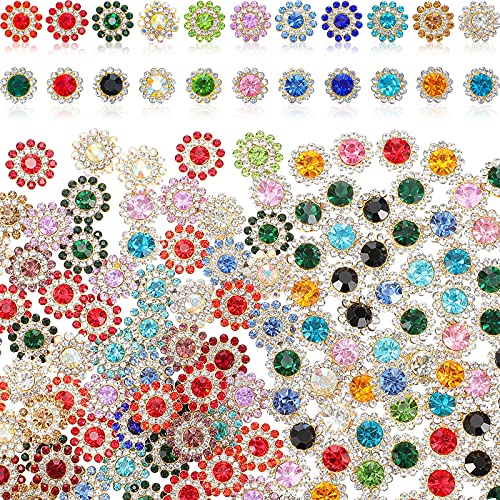
As the name implies, these buttons are covered in beads or rhinestones. Mainly used for decorative purposes.
You can also make them yourself by beading plastic beads on a flat shank button.
9. Antler
No products found.
Real antler buttons are made of deer antlers. They will often imitate the shape of a horn and have holes to sew them into clothes.
Nowadays,you can find these buttons with materials like plastic or wood to mimic the finish of the material.
10. Abalone

An abalone button has a type of pearl finish.
It is similar to a flat button that has holes in it, only that they make this button from the shell of a mollusk called a sea ear.
These buttons are perfect for decorative pieces on blouses and day dresses.
11. Frog
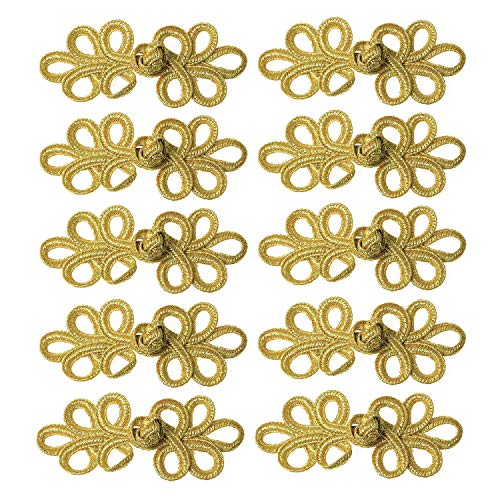
A frog button is an ornamental fastener that uses a cord or braid through which a softball or knot button is pulled. As a result, the button forms a beautiful embellishment.
12. Decorative
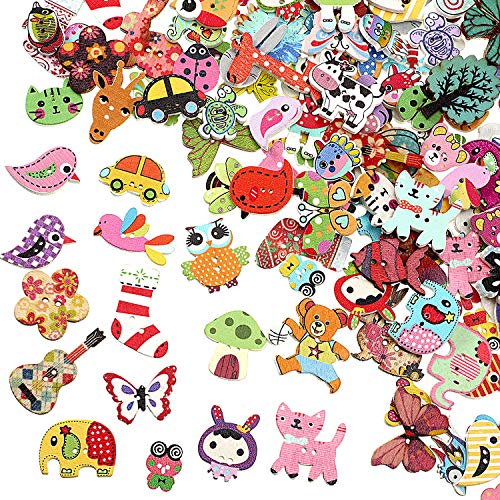
Decorative buttons can be made in all kinds of sizes, shapes, or materials.
Look for them with the name of novelty buttons, too. They exist in any kind of design you can think of.
Types of Buttons Sizes.

You will measure buttons in a unit called Ligne (french for line).
One ligne measures .63 mm.
But this is a tough conversion to make if you are constantly buying buttons for your clothes and need specific measurements.
However, you don’t need to worry because we have 2 amazing Button Size Charts that you can download and keep in handy that have ligne, mm, and inches conversion.
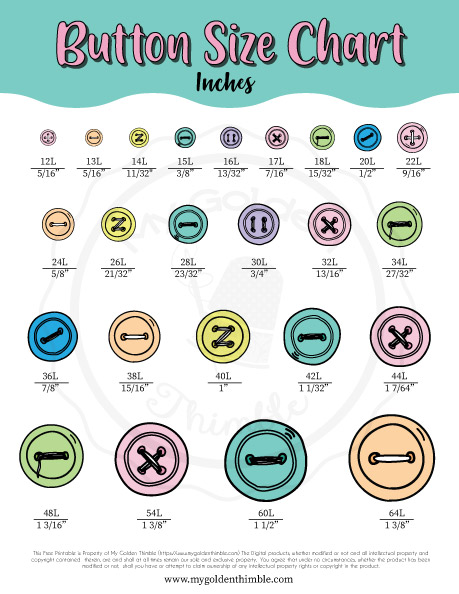
You can even download one chart and measure your buttons by putting them over the drawings to avoid too much thinking.
To give you an idea, a 20-ligne button measures ½”.
What materials are used to make these types of buttons?
Companies make these types of buttons in all kinds of materials. Above all, plastic and metal are the most common materials.
Followed by wood, pearls, seashells, bones, ceramic, and even latex.
But, if you are looking for a high-end button, you can actually find them made of gems or real pearls. Some button makers encrust them with real diamonds, and others are made from pure gold.
What is your favorite type of button or the oddest one you have ever found? Let me know in the comments below. I would love to read to you!
Don’t forget to follow us on Social Media!!

This is very educative. Thanks for sharing
You are most welcome friend!
Oh, I love these tips you send us. As an oldie who has forgotten more than she remembers, these will help me refresh. I have started keeping some organized notes in my iPad so I can refer back to them of my daughter or granddaughter wants them some day. When I was in 7th grade (1965/66) homemaking, my teacher had us make a booklet of quite a few different types of stitches on “pages” and when to use. I was so proud of that and kept it for many years. I think it was only bout 15 years ago that I threw it away.
Omg That’s so touching! Thank you so much for sharing it with me. My great aunt and my grandmother teached me a lot of what I now know. So I can assure you your grand daughters will treasure your notes FOREVER! That’s better than gold. Sending the biggest and warmest hug your way.
Thank you for this information, very informative.