
These are the essential Measuring Tools in Sewing that you need to make amazing sewing patterns and make your sewing life easy.
All of these tools have helped me to sew faster and more efficiently, making my cutting lines precise and clean.
And I am not talking about your basic straight rulers. No, my friend, in this post, you will find all sorts of crazy and useful things to measure all things sewing.
Keep reading to discover what these tools do and where you can obtain them.

NOTE: This post contains affiliate links, which means that if you make a purchase using one of the links in this article, I may earn a commission at no extra cost to you (To know more about this, click here.)
I am sure that you are familiar with your basic acrylic ruler. But do you know all the types of it?
And that’s not the only one!
I have compiled a list of essential sewing tools, as well as some other, not basic but equally helpful ones.
I bet you love to find new odd sewing gadgets or pretty sewing tools. Having new tools to make your job easier and, let’s face it, more fun it’s pretty great.
Now, imagine finding extra helpful tools and realizing how much you can do with them. You may wonder how you managed to live this long without them .Every measuring tool is vital for a different thing. Without them, we wouldn’t be able to sew our clothes and projects.
We also need them to draft or modify our sewing patterns.

To take our body measurements and use those measurements to select the correct size on PDF sewing patterns.
I could argue that these are the most important tools to help us make our garments to perfection.
Let’s start with the basic information.
types of Sewing Tools
We can categorize our sewing tools into five main categories: measuring, cutting, marking, pressing, and sewing.
These tools help us take body measurements, mark patterns on pattern-making paper, grade between sizes, measure seam allowances, and perform different tasks.
Once you master the essential measuring tools, you will discover so many others to help you facilitate certain activities within your sewing process.
Initially, you may want to opt for only the basic ones. But after a while, you will want them all.
Considerations when buying my Measuring Tools
If this is the very first time purchasing measuring tools for sewing, consider investing in high-quality tools.
If you get the right rulers and tapes, they will last you a good lifetime.
Take my pattern drafting rulers, for example.

“Item is exactly as described… I highly doubt there’s any drafting tool brand better than this one. This will last you until you pass away. Extremely durable, which is why I had no problem buying it again. These are the only drafting tools I recommend to fashion designers, if you want quality over quantity, that is.”
I have had these rulers set for more than 15 years now. And they still have a long way to go.
And yes, they didn’t come cheap. But it is the wisest investment I have made regarding sewing tools.
Just saw that review on Amazon. I am not the only one who thinks that.
Take your time and consider investing in good quality, at least for the most essential ones.
The second thing you probably want to consider is the kind of work you will be doing in your sewing room.
For example, if you don’t sew clothes at all, you probably won’t use the pattern rulers I just mentioned.
You can sew crafts with only the acrylic and maybe the quilting rulers alone.
Measuring Tools in Sewing. Name, Uses, and Top-Rated Products.
1. Measuring Tape

It is a soft, flexible tape with cm or inches marked along its length.
It is ideal for taking body measurements and making quick fixes to your patterns.
These measuring tapes can come with a length from 60″ to 120″ and have metal ends at each end to prevent wear.
2. Sewing Gauge

A sewing gauge is a practical and incredibly useful small ruler.
It has a sliding mark that helps us measure the exact distance of hems, buttonholes, pleats, and seams while sewing.
It is usually made of metal with a plastic slider.
But you can also find a more advanced design to measure corners and angles with a plastic sewing gauge.
3. Clear Ruler
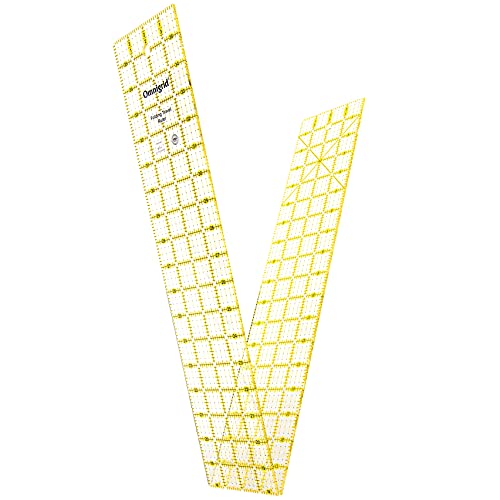
This measuring tool is not only beneficial for sewists, but also for those who work with fabrics.
There are actually numerous brands of this type of ruler designed for artists, designers, architects, and engineers.
The clear material allows a clear view of numbers and letters.
This clear ruler is incredibly cool because it can unfold to make it larger.
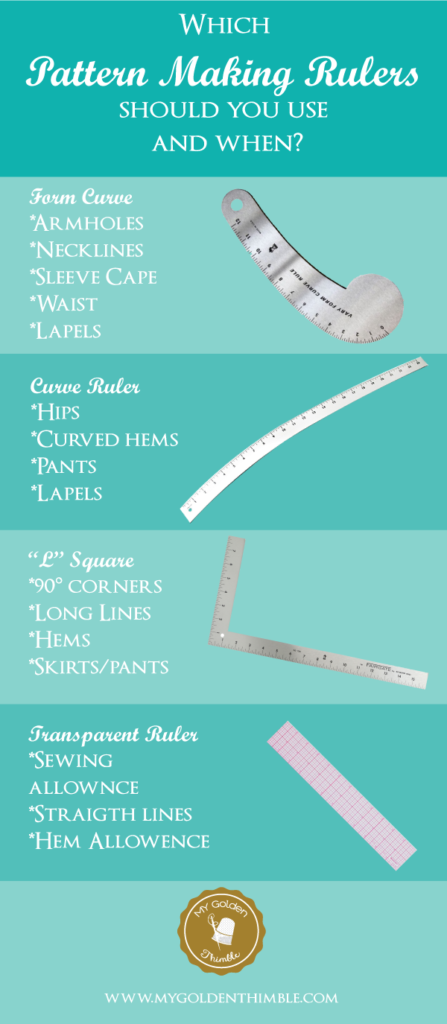
4. Pattern Making Rulers- L Ruler, Curve Ruler, French Ruler.

These are the best pattern-making rulers I was telling you about. You can get the whole kit at once, with a user manual included here.
This is what the different types of rulers of the kit are for.
- L-Ruler. Its shape makes a 90º angle, with one side longer than the other. It is used to draw the straight lines of the pattern. It has marks on both sides.
- Curve ruler. This ruler allows you to draw perfect hip lines, hems, and hemlines. Also good for drawing two-piece sleeves, flared shapes, and more. Use this ruler on any part of a design where a smooth curve is needed.
- French Ruler. It has a “6” shape. It is used to trace pronounced curves in armholes, sleeves, and necklines.
5. Flexible Ruler
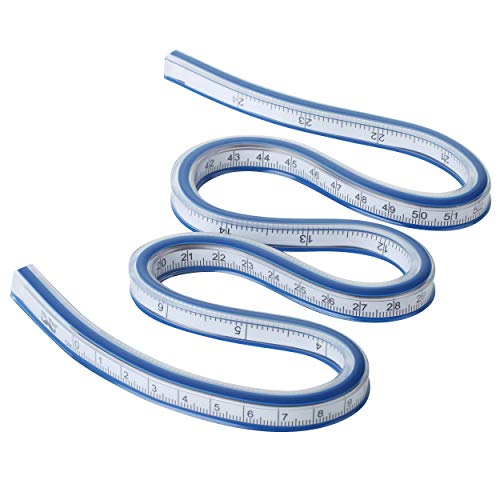
It adjusts to the desired shape. Flexible rulers are great for transferring crotch measurements by copying the exact contours of your curves.
This ruler is ideal for curved seams and designing patterns.
Its composition material, vinyl, makes it suitable for this type of work.
Another great thing about it is that it does not discolor and decompose over time.
They typically measure 24 inches (60 cm) in length.
6. Buttonhole Gauge

A Buttonhole Gauge is an expandable measuring instrument that helps us quickly measure the distance between buttons, buttonholes, pleats, and other similar measurements.
It usually has a 24″ measurement.
7. Quilter’s Ruler Kit
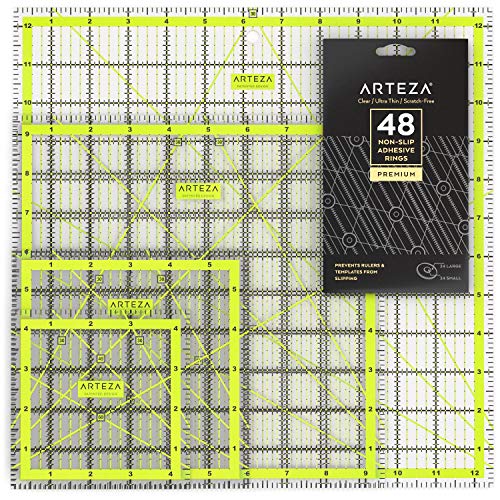
Quilter rulers are perfect for cutting several layers of fabric in blocks.
This type of ruler will help you make the most beautiful and aesthetic quilts in an easy and precise way with the help of a sewing machine.
8. Stick on the Measuring Tape

The Stick-On Measuring Tape is perfect for having a “ruler” near you on your cutting table or sewing machine.
Ideal for cutting surfaces.
This sticky tape measure features a permanent adhesive back that adheres to almost any work surface, including metal, wood, plastic, glass, and other materials, for easy measuring.
9. Sewing Hem Clips
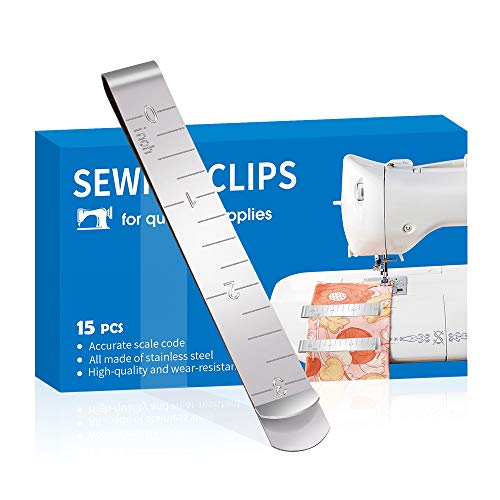
These practical clips are wonderful for holding your fabric in place while you are marking the hem’s seam allowance.
You don’t need additional tools like pins or basting stitches.
These clips will hold your layers of fabric together, and they have marks in inches for you to make sure that you are clipping the same distance across the whole hem.
10. Self-healing Cutting Mat

A self-healing mat helps you to protect your surfaces from your cutting tools.
It is a multi-purpose cutting mat, ideal for sewing, crafting, modeling, quilting, scrapbooking, and cutting projects.
Generally composed of acrylic or PVC, a material that prevents the blade of rotary scissors from damaging your cutting table.
There are various sizes of self-healing mats. Choose the one that fits the best over your cutting table.
11. Stitch Gauge
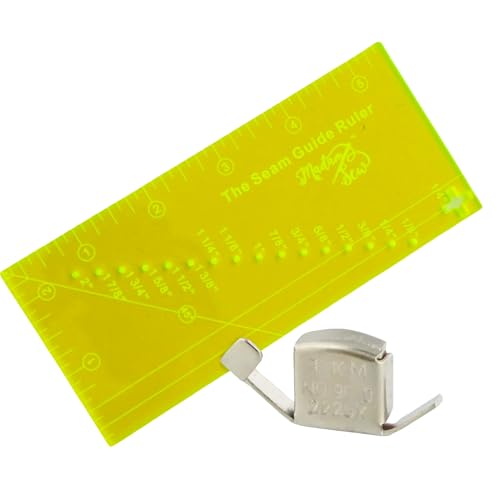
A stitch gauge, also known as a Seam Guide Ruler, is a guide you can use with the machine.
It helps us measure the distance we are making our seam, between the edge of the fabric and the machine’s sewing needle.
12. T-shirt Ruler for Vinyl or Embroidery Alignment
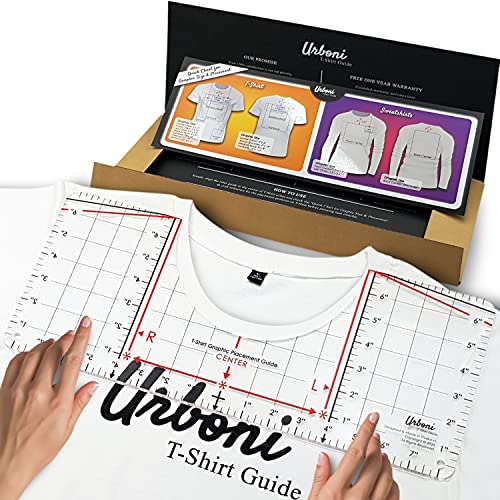
Guide ruler helps us accurately align and center the designs to be transferred or embroidered into a shirt.
You can add designs made with your Cricut machine, sublimation, screen printing, vinyl press, and more.
Especially useful for T-shirts or other round-neck garments.
13. Quilt Heat Ruler

This is a Heat-resistant ruler that you can use safely while pressing.
This tool has a non-slip surface that holds the fabric in place for accurate results, withstanding dry or steam ironing.
14. Magnetic Seam Guide
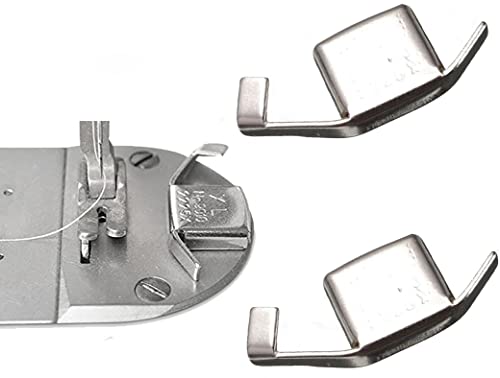
A magnetic Seam Guide is a tool with a magnet that you can place over the needle plate at the desired distance.
This will allow you to keep your seam allowances straight and even.
It is advised not to use electronic machines because the magnetic field it generates can affect the operation of the machine. Still, it is also true that this generated field is minimal.
The magnet is really, really small.
Check with your supplier to ensure this won’t affect your machine.
15. Adjustable Seam Guide Presser Foot
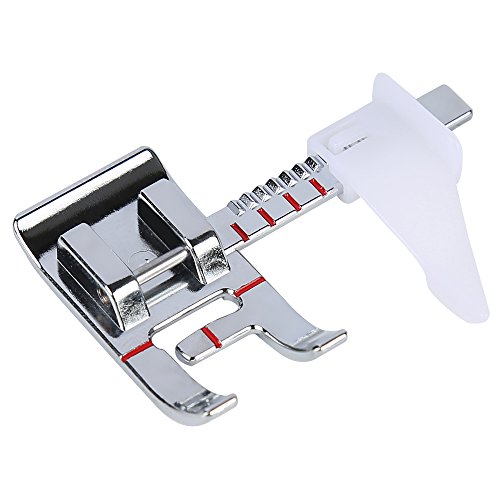
This presser foot has a built-in adjustable ruler guide.
This little guide is perfect for keeping your stitch measurements accurate at all times.
It helps us with projects that require the utmost precision, such as sewing garments, stitching, or piecing the perfect quilt.
Fits most low-shank machines.
16. Mini Sewing Measuring Gauge
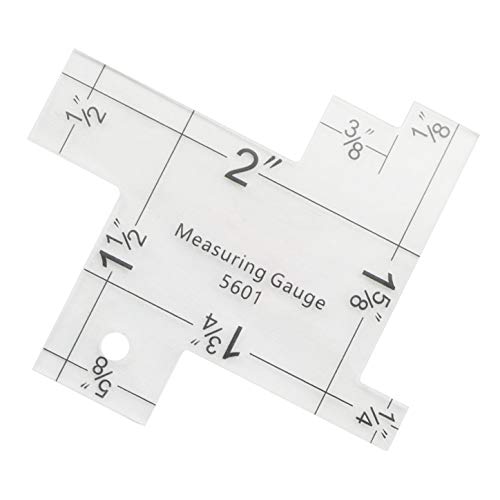
It is used for checking small measurements during quilting or sewing projects.
The gauge features 14 common measurements in one tool, ranging from 1/8 to 2 inches. Made of clear plastic, it allows for easy visibility of the fabric and markings.
It is a handy tool for various sewing applications, including clothing design, patchwork, and pattern making.
Now that you know which measuring tools are available for sewing, let me know which one you didn’t know in the comments below.
Don’t forget to follow us on Social Media!!


1 thought on “Measuring Tools in Sewing. Name, Uses, and Top Rated Products.”