
Say goodbye to sore muscles by learning how to make a rice heating pad from home! Add a few drops of essential oils for an extra relaxing touch. Get the free sewing pattern and step-by-step instructions in this post.
The first DIY rice heating pad is perfect for your shoulders and back, and you can use the second one on any part of your body thanks to its practical shape.
These easy-to-make microwavable rice heating pads will be your best friends when you are looking for a relaxing day or for when you need to relieve muscle pain anywhere in your body.
But the really cool thing about these heat packs is that they can be used as cold packs too! Just stick’em in the freezer for a couple of hours, and you will be ready to go.
So what are you waiting for? Get your materials, and let’s sew this.

NOTE: This post contains affiliate links, which means that if you make a purchase using one of the links in this article, I may earn a commission at no extra cost to you (To know more about this, click here.)
If you have any concerns or specific medical conditions, it’s advisable to consult with a healthcare professional before using a heating pad.
- Why Use Heating Pads?
- What is a homemade heat pack used for?
- How do you microwave a heating pad?
- How to make a rice heating pad with essential oils?
- What do I need to Make a Heating Pad?
- How to make a Rice Heating Pad?
- Additional DIY Heating Pads Tips and Recommendations:
- Heating Pads Free Patterns Download.
Why Use Heating Pads?
Heating pads are one of my favorite self-care items in the world. That is why I have made so many homemade heating pads with uncooked rice and other seeds in the past.
I have a homemade rice heating pad with the shape of a heart that I made specifically for my menstrual cramps (the shape is just fantastic for your tummy). And, of course, I make some small Christmas-themed hand warmers that are microwave safe for all my friends and family every year.

I just love how easy it is to make one of these DIY heating pads. You can make them in just a few minutes. And the best thing is that they are highly customizable, from the colors, patterns, and shapes of the fabrics to the smell of the pad. I love using essential oils and dry herbs like mint to make them particularly special.
And you can use them for many things, from easing pain to putting them in your bed to warm your feet on a cold night.
The other great thing is that you probably already have all the necessary materials in your home. So if you have about 15 minutes, you are ready to go.
What is a homemade heat pack used for?
Heating pads are great for relieving muscle pain, headaches, cramps, and other aches of the body. They have also been proven to have relaxing properties, especially when you mix the filling with essential oils.

Other uses for DIY heating rice pads are to warm up the body on cold days. For example, you can use them as hand warmers by making small-size pads that can fit in your jacket’s pockets. Or if you suffer from cold feet at night, you can warm and place a heating pad under the covers at night.
If you put these pads in your freezer for a few hours, they can also work as cold pads, which are great immediately if you apply them after an injury. They can help minimize swelling and promote a faster recovery.

They are also great for treating fever by lowering the body’s temperature.
Finally, heating pads are an amazing sewing gift idea you can sew for your friends and family or even to give as party favors.
My Heart DIY Heating Pad for Cramps is a success among my friends.
There are a lot of versions of these homemade rice heating pads. I have even seen a rice sock pad that could be perfect for people who don’t know how to sew. So feel free to try and customize your pad’s shape depending on your needs.
How do you microwave a heating pad?
If you use the suitable materials on the list in this tutorial, you will be able to use your microwave to heat your rice pads safely. You can place the pad directly in your microwave or use a ceramic plate as a base.
The more important thing is to test your microwave heating strength. Even though I will make some timing recommendations, the best course of action is to test heating your pad minute by minute.
I wouldn’t go over 2 minutes at any given time. Two minutes is enough for a heating pad like the one we are making here. With that time, the heat will last over an hour.
You should always take into consideration the size of the heating pad too. A hand warmer like the one I made for Christmas will only need about 30-45 seconds to last for a long time. The smaller the pad, the less time it will need to heat up.
How to make a rice heating pad with essential oils?

I have known the concept of aromatherapy with essential oils for a while now. But it wasn’t until I went to a fancy spa to get my mani-pedi done that I realized how good it actually was in addition to a rice heat pad.
I remember they asked me for my favorite essence, and I chose lavender. And when they put the warm heating pad around my neck… Gurl, I was in heaven.
Now, I add a few drops of essential oils to all my microwavable heating pads. And you can add any essence you like to your homemade heating pads too!
Add 40 to 50 drops of your favorite essential oil to add essence to your heating pads to one bag of rice. Mix it well and use this rice to fill your pads. Try to do this right before putting the rice into the pad so the smell can last longer.
The best therapeutic essential oils.
- Basil Oil. For headaches and migraines.
- Eucalyptus Oil. It can help to relieve the airways when you have the flu.
- Lavender oil. Relaxation and Sleep.
- Lemon Oil. It is a great mood booster and can relieve some depression symptoms.
- Thyme Oil. Reduces fatigue and stress.
Eventually, the smell will fade, but you can always add more drops to the fabric.
Other alternatives to essential oils are dry herbs like rosemary, lavender, or peppermint.
What do I need to Make a Heating Pad?
These are the materials needed to make a homemade heating pad.
- Two rice bags (cheap rice is good)
- Half a yard of medium-weight 100% cotton fabric.
- Essential Oils.
- One sheet of paper.
- Tape
- Sewing Machine
How to make a Rice Heating Pad?
Neck and Shoulders DIY Rice Heating Pad.
1. Download the Pattern and Cut your Fabrics
The first thing you have to do is to assemble your pattern and cut the pieces on your fabrics.
You will need to cut two layers of fabric for each pad you want to make. Do not add seam allowances as the pattern already comes with it (⅜”).
If you don’t have your sewing pattern already, I will tell you how to get it at the end of this post.
This pattern is free to download and includes the Neck and Shoulders and the rectangular version of the pads. I will show you how to make both versions in this tutorial.

2. Sew around the heating pad.
Aling the pattern pieces with the right sides of the fabrics facing together and sew as indicated in this image below.
We will put the rice last instead of inserting it on each row and sewing it one by one. This way was a lot easier for me, as handling the weight and volume of the pad with the sewing machine was a bit uncomfortable.
Leave the spaces open, as I show in this picture. Around 2” should be fine for the top and the bottom.
As for the side, you need to leave most of it open. I stopped sewing right after the curves so I could hold the shape of the curves better.
3. Turn inside out.

Make clips and notches around every curve in the heating pad so you can turn it and end up with perfect sewing curves.

Once you have the pad right side out, press it flat with the open seam allowances folded to the inside of the pad.
4. Sew the pockets.
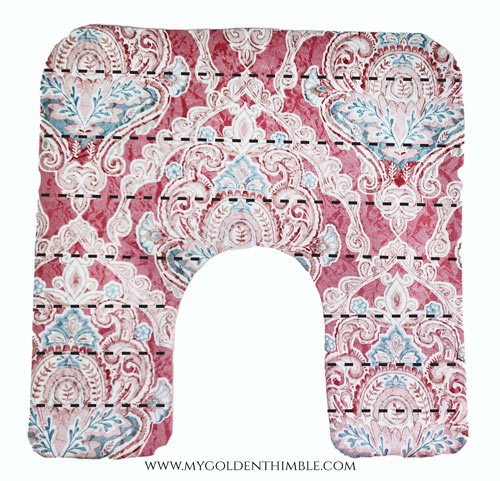
To make the pockets, you will draw the following lines with your favorite marking tool. Use the sewing pattern notches as references to mark your pattern.

Sew in a straight line, and remember to backstitch at each line’s beginning and end.
*Optional* Add the essential oil to the rice.
If you want to make your heating pad smell amazing every time you heat up, consider adding some of your favorite essential oils.
I added the rice to a bowl and then 40-50 drops of lavender essential oil to my 1 ½” bags of rice for this project.
5. Fill the pockets with rice.

Use a paper sheet and tape to make a cone with an open end. Use this to help you put the rice inside each pocket.
Do not fill it to the top. Leave about ⅓ of the pocket without rice. This will help you to avoid a stiff pad you won’t feel comfortable using.
If you don’t have a paper to make the cone, you can use a spoon or a measuring spoon to help. Whatever the case, I recommend you try to do it with a big bowl to catch the seeds that will inevitably fall. LOL.
Hey! The mess comes with the crafting territory.
After you fill up to ⅔ of the pocket, hold the opening close with the help of pins or sewing clips.
6. Close the openings.

Close each opening by hand with an invisible stitch. You can close each opening as you finish filling each pocket.
Make sure to make close stitches so the grains won’t fall off the bag.
Make a hand knot with the thread and cut the tails off.
By now, you probably noticed that one “leg” of our pad has a tricky filling need.
Here is what you’ll do.
7. Fill and sew by rows in the last part.

I know that this step is probably a little tricky. As I said, we wouldn’t be sewing the heating pad like this.
But I found it easier to sew a couple of rows like this instead of the whole thing.
That is why I left this part as it is.
Use the leg’s opening to fill the first row, ensuring you don’t overfill it. Then secure the row with pins.
Change the sewing presser foot on your machine to a zipper presser foot, and sew over the line you marked.
Do this two times, and fill and close the last row as we did above with an invisible stitch.
Now, let’s see how to make the classic DIY Rice Heating Pad.
Classic Rice Heating Pad DIY

For your classic rectangular heating pad, you are going to follow the same steps of the tutorial above.
But this time, you are only going to leave one of the long sides of the rectangle open.
Then use the pattern notches to mark the lines and sew above them. Remember to backstitch at the beginning and at the end of each line.
Fill the pockets with rice and then close them with an invisible stitch.
And then you are done!
Your heating pad is ready to be heated in the microwave and gives you a relaxing time.
Remember not to go over 2 minutes, and test the heating power of your microwave by putting it in for 45-60 seconds at a time.
Additional DIY Heating Pads Tips and Recommendations:
A homemade heating pad can be a very convenient and cost-effective option. Nevertheless, it is important to be cautious and use them responsibly.
Here are some great tips to take into consideration to make and use a homemade heating rice pad.
Fabric Selection.
Choose fabrics that are safe and suitable for heating purposes. Natural fibers like cotton fabrics or flannels are the most popular options for this project.
Avoid synthetic fabrics at all costs, as they can melt and damage your microwave, pad, or even yourself.
If it is possible, try to use 100% cotton thread too.
Size and Shape.
Decide the size and shape of your DIY heating pad depending on the use you want it for.
For example, the first pattern I gave you here is perfect for neck, back, and shoulder pain. On the other hand, the rectangular shape is very versatile and can be comfortably placed in various body parts like your tummy, lower back, knees, and elbows.
For cramps, my favorite choice is the heart-shaped heating pad because it covers the exact zone of my pain instead of heating my entire lower body up.
I recommend using hand warmers or a long rectangular rice sock heating pad for warming purposes.
Heat distribution.
To make sure you have an even heat distribution, always divide your heating pads into sections. Whether by rows, squares, or lines, this will help avoid clumps and distribute the heat evenly on your pad and, therefore, on your body.
Microwave safe.
I can’t stress this enough. Make absolutely sure you don’t leave any pins or metallic items in your heating pad before putting it inside the microwave.
Any metallic parts attached to the pad could cause sparks or damage to your microwave or electric wiring.
Safety precautions.
If you are giving this heating pad to a friend or family member, remember to include clear instructions on how to use it, how to warm it, and how to handle this pad.
Advise the user to avoid overheating the pad by doing the 45-60 seconds test I told you before in this post. Ask them to check for any signs of damage before they use it too.
Temperature Testing.
Always test the DIY heating pad on a sensitive area of your own skin to ensure the temperature is comfortable.
This will avoid burns or discomfort when you use the pad.
If you feel that it is too hot, leave it cool for a minute and test it again. Use it when you feel it is comfortable for you.
Heating Pads Free Patterns Download.
Pin these Patterns on Pinterest for Later.
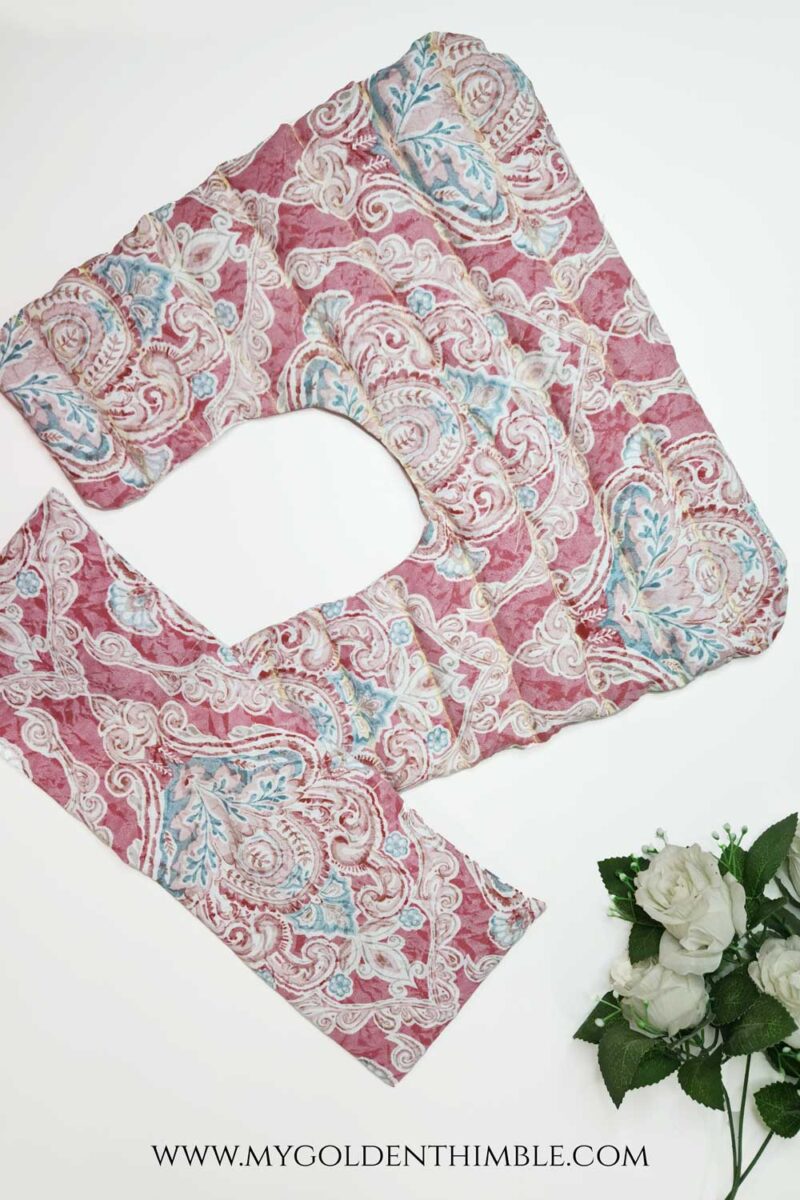
This free pattern contains two styles of heating pads. Go to our store and add it to your cart. Follow the instructions to complete the order. After that, you will be redirected to the confirmation page, where you can download the patterns. You can also access the patterns by signing into your account at our website’s menu. Finally, look for the download links in your confirmation email.
Do you enjoy our freebies?? Support us so we can keep making freebies for you by buying us a cup of coffee here. We will be forever grateful!
Don’t forget to follow us on Social Media!!

I watched it on a tutorial and I seen 21 inches so 7 inches small tube for shoulder and 7 inch cut out and another 7 inches on the other small tubes. Filling it is the worst but was easy to make. I just finished mine and heated two minutes and it works. Going to teach my self to make a hand one that you can stick your hand in. Wish me luck . Thank you.
I have had them for a couple of years now and love them. They make great gifts too!
Thank you for creating and sharing this pattern. It is a great pattern. The instructions and images were clear. The only call out I have is the images vs the instructions. One portion reads “ As for the side, you need to leave most of it open. I stopped sewing right after the curves so I could hold the shape of the curves better.” This did not match the image shown above this text. The image only shows that one side is left open, along with the bottoms and top. I had to use a seam ripper to open the other side after I sewed my lines.
I will sew this up again. The only change I would add is what is mentioned above and possibly allow more seam allowance to machine sew, and add a top stitch to hide the closures.
Thank you so much for that comment Nicole! I am so sorry for that, I will update the article as soon as posible.
Thank you for the awesome pattern. I just finished mine and I ❤️ it. I’ve needed heat on my neck and shoulders for years and have made many rice bags but this fits my body perfectly and is not heavy. Your efforts are much appreciated and I found it easy to download. 🪡🧵🪡
The neck one is great for my back and shoulder’s pain. I am very happy that you liked this pattern! Thank you for leaving this note.
Love this pattern, thank you.
I would have liked to be able to print the sewing instructions.
❤️
Thank you so much for letting me know! We are actually working on making printable instructions for our posts too 🙂
I can’t seem to download the printable pattern, no size information at all. I am glad I didn’t have to buy it. I guess that’s why it free? Thank for the idea of it.
Umm… I think that you maybe wanted to ask for help? Or did you just wanted to tell me of?
Hehe if you wanted to ask for help, please let me know and I will gladly help you to download this pattern and solve your issues. If it is the other thing… Amm… You are welcome?
Love mine, now making them for families
They are an amazing gift! I got a couple of ones on a bachellorete party and they were lavander scented.
I loved them. But they where a square one pocket heating pad… I rather have the segments 😛