With so many different types of boning available for sewing, it can be hard to know which one is the right choice.
Boning can add support, shape, and stability to everything from corsets and bodices to strapless dresses and costumes.
And, while some types of boning may look or even feel similar, each one is designed with a specific purpose in mind.
Choosing the right one can make a big difference in how comfortable, supportive, and long-lasting your finished garment will be.
In this guide, I’ll walk you through everything you need to know to choose the best boning for your sewing project.
NOTE: This post contains affiliate links, which means that if you make a purchase using one of the links in this article, I may earn a commission at no extra cost to you (To know more about this, click here.)
We’ll take a look at the most common types of boning for Sewing, what makes each one unique, and how to choose the best option for your project.
I’ll also share where you can buy them, what to expect from each type, and how they behave once they’re sewn into a garment, so you can shop with confidence and get the results you’re hoping for.
What Is Boning in Sewing?
Boning is a narrow strip of flexible or rigid material that’s sewn into a garment to help it keep its shape.
Think of it as the hidden support system that works behind the scenes—it doesn’t steal the spotlight, but it sure deserves some credit!

Boning adds structure exactly where it’s needed. It helps garments hold their shape, prevents fabric from collapsing or wrinkling, and gives extra support without making the garment feel bulky.
Different types of boning provide different levels of support and flexibility, so choosing the right one depends on the look and feel you’re trying to achieve.
The good news?
Once you understand how each type behaves, picking the right boning becomes much less intimidating.
Let me tell you all about them.
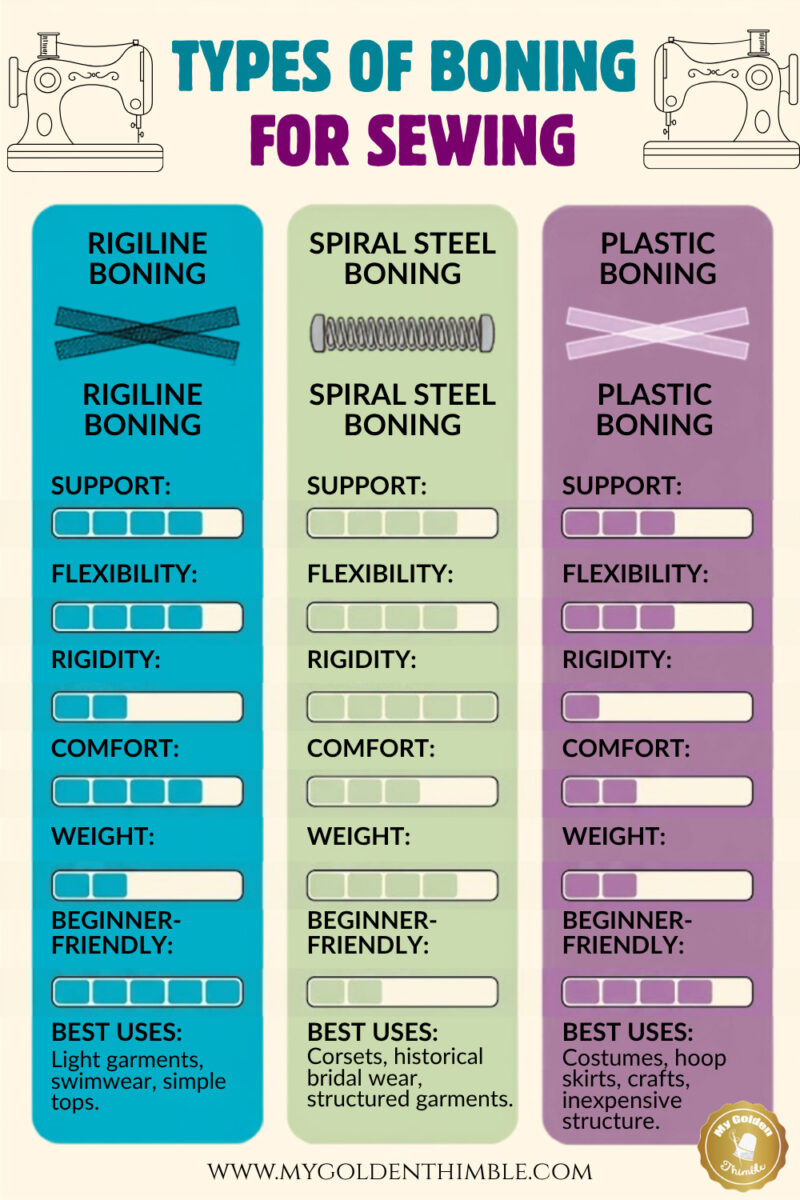
Types of Boning
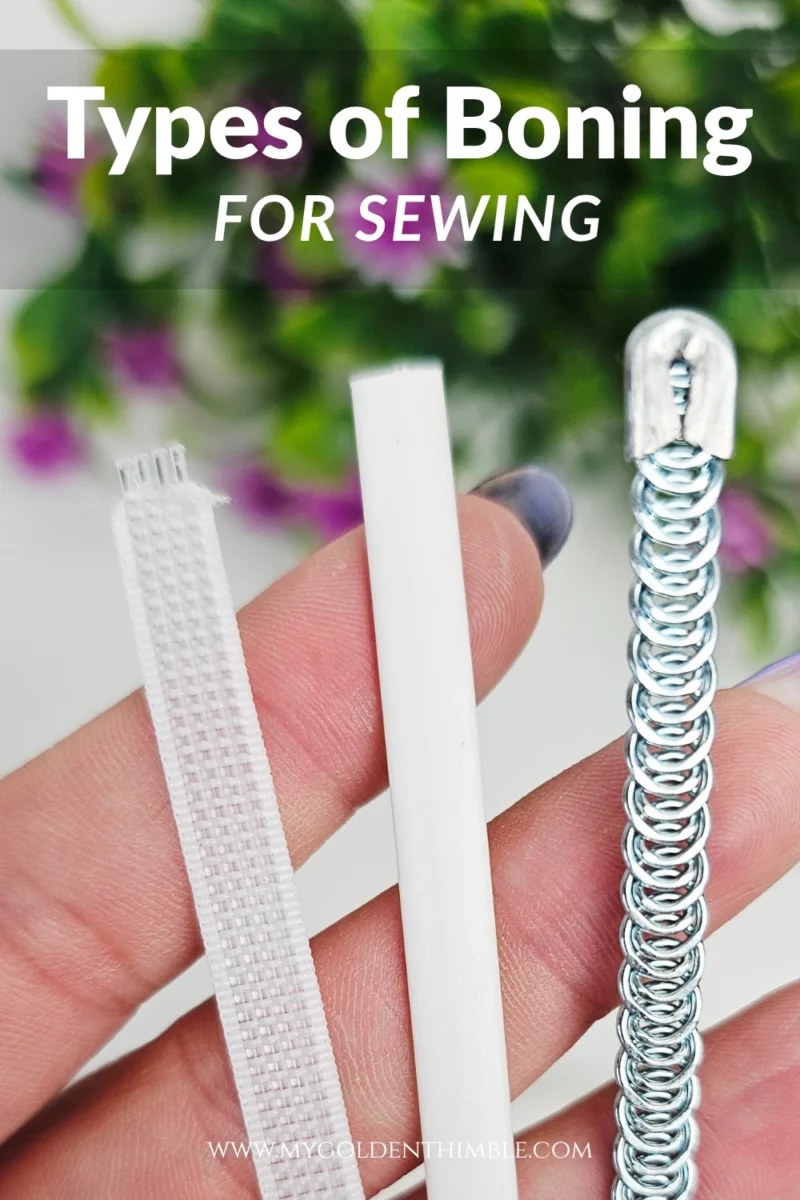
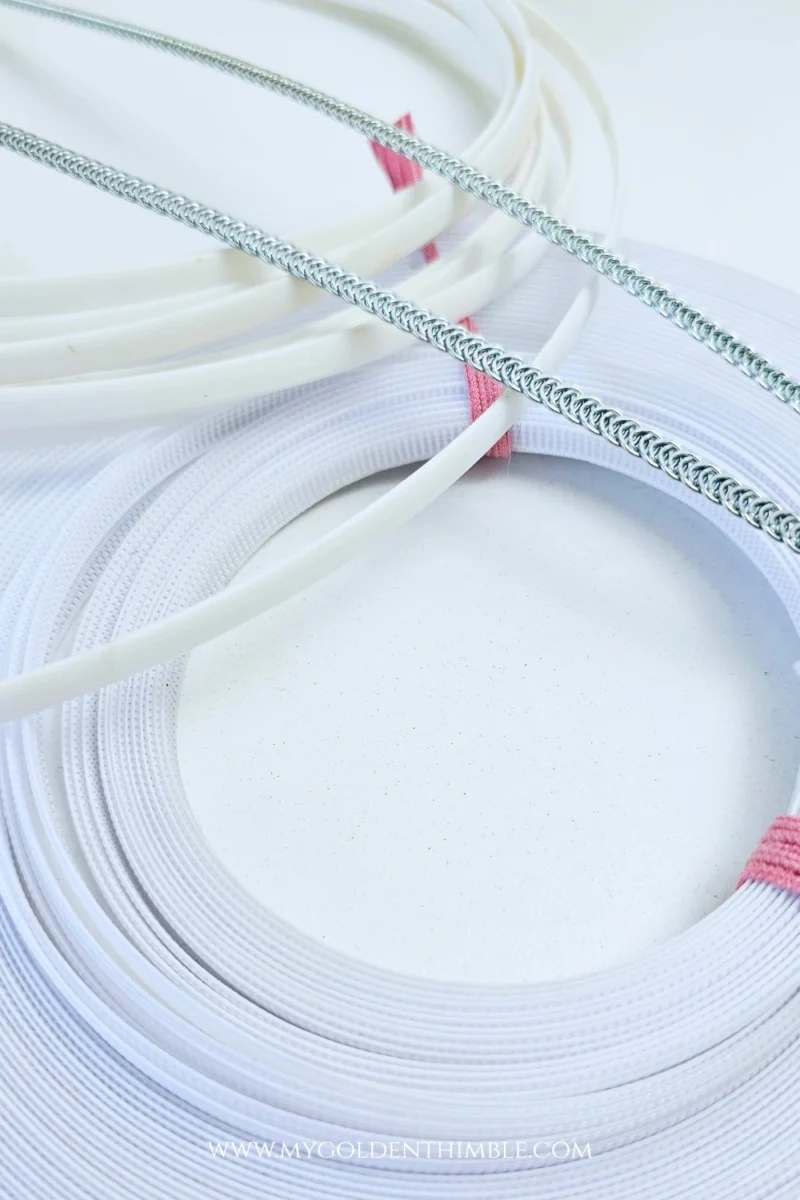
There are several types of boning available, and each one has its own strengths. Some are flexible, while others are designed to create a firm structure.
These are the 3 most commonly used in fashion garments.
Plastic Boning
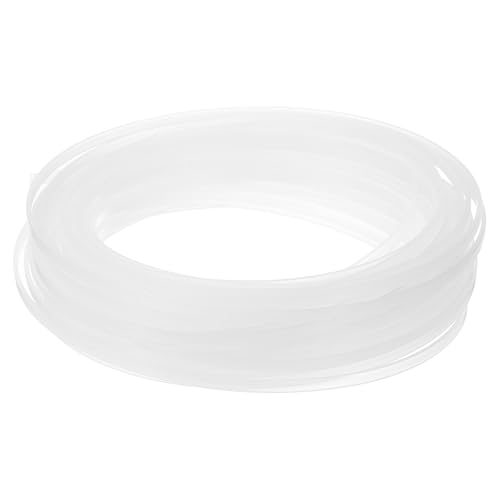
- [Package Includes]: 1 roll of 20 yards of transparent plastic boning,2mm thick,5mm width, can be cut into suitable lengths as needed, you have enough materials for cutting and making.
- [Reliable Material]: Our corset boning is made of durable transparent polyester material, which is wear-resistant, stable structure, not easy to break, has good shaping effect and is washable.
- [Easy to Use]: Our sewing boning can be used for hand or machine sewing, sewn directly on the fabric, and can be moved in the garment for easy use.
If you asked me to pick a favorite, plastic boning would definitely be at the top of my list!
It has so many qualities that make it a joy to work with, especially if you’re looking for something that’s practical, affordable, and beginner-friendly.

Characteristics
Plastic boning is made entirely from plastic and is designed to add structure while still allowing your garment to move comfortably.
It helps prevent fabric from rolling or collapsing, making it a great option whenever you want your project to hold its shape without feeling overly stiff.
Pros
One of my favorite things about plastic boning is how incredibly easy it is to work with. Since it’s nice and smooth, it glides into boning channels with almost no effort (and trust me, you’ll appreciate that when you’re inserting several pieces!).
It also comes on rolls, so you can simply cut (with any craft scissors) the exact length you need for your project.
Another reason I reach for it so often is that it’s super lightweight!!
It gives your garment the support it needs without adding extra weight (yes, it adds up when you are putting over 20 bonings), and because it’s made from plastic, you don’t have to worry about it rusting if your garment gets washed.
Pretty convenient, right?
Cons
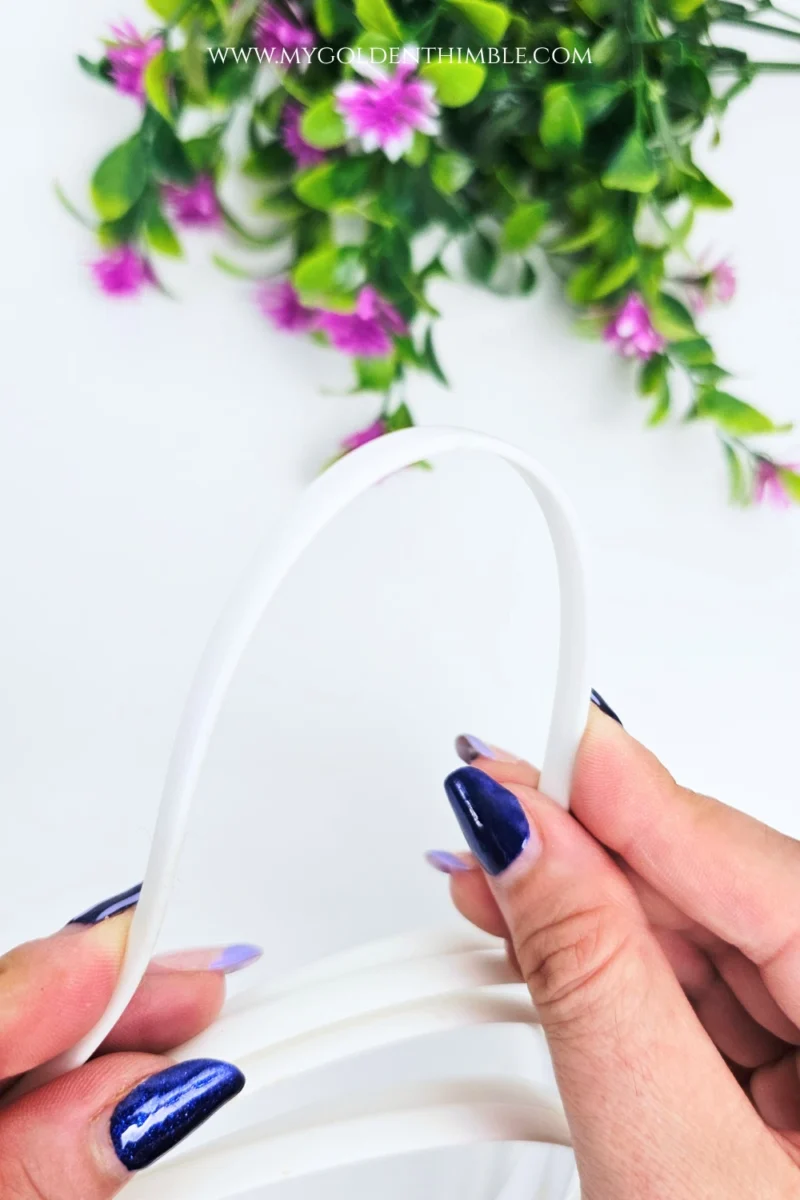
I think one of the biggest cons I’ve seen with plastic boning is that it is way thicker than other boning.
And you might think this is not a big deal.
If you see them side by side, is it really that much thicker?
Well, the answer is yes.
I want you to imagine a water bottle being inserted inside a sock.
Before the bottle goes in, the sock lays nice and flat. Once the bottle is inside, the fabric has to wrap around it, making the sock appear much wider.
The sock’s volume will pull the fabric up along the sides to cover the entire bottle.
And the same thing happens with your fabric!! Even more so, because the fabric you usually use for garments with boning won’t be stretchy.
Those extra millimeters start adding up the more boning you use. Before you know it, your garment can end up almost half an inch smaller than you planned!
Best Uses for Plastic Boning
Use plastic boning when you want strong, stiffer structures without the weight of metal boning. They work great in costumes or historical corsets.
Rigilene Boning

- 【Boning for Corset Making】: This plastic boning for sewing provides firm yet flexible support for corsets, bodices, and bridal wear. The corset boning for sewing is sew-through design, allowing you to stitch directly onto fabric for quick, secure placement in your garment construction
- 【Premium Plastic Boning Material】: Crafted from durable polyester, this no sew boning for sewing is strong, wear-resistant, and maintains its shape after washing or dry cleaning. The flexible plastic boning bends smoothly with body contours, ensuring comfortable fit and lasting structure
- 【Easy to Cut & Sew】: The corset boning can be easily trimmed to any length with regular scissors and sewn by hand or machine. This plastic boning for sewing is low-density, making it simple to insert into casings or attach directly to seams, perfect for both beginners and experienced sewists
If I had to describe rigiline boning in just a few words, I’d say it’s the perfect choice when you want structure without rigidity.
It gives your garment a little extra support while still letting it move naturally with your body.

Characteristics
Rigiline boning is made from lots of teeny, itty-bitty plastic tubes placed side by side and wrapped in a woven fabric covering.
Unlike most other types of boning, rigiline can be sewn directly onto your garment. In many cases, you won’t even need to make boning channels. If you’ve ever dreaded sewing boning channels, this little feature alone might win you over!
Pros
One of the biggest reasons I enjoy working with Rigiline is just how stress-free it is. Since you can stitch right through the fabric covering, it’s quick to install and doesn’t require much extra preparation.
It’s also super lightweight and bends beautifully with your body, so your garment feels comfortable instead of restrictive. I love using it whenever I want to add shape without making the garment feel stiff or overly structured.
Just like plastic boning, it usually comes on a roll. So cutting it to the exact length you need couldn’t be easier.

Cons
The same flexibility that makes rigiline so comfortable is also its biggest limitation.
If you’re looking for a boning that will create a very structured corset or hold a dramatic silhouette, this probably isn’t the one. It simply doesn’t have enough rigidity to provide that classic corset support.
Another thing to keep in mind: you need to finish the ends really well. Since it’s made from lots of tiny plastic tubes, they can work their way out of the fabric covering over time if the ends aren’t properly sealed.
And trust me… nobody wants a tiny piece of plastic poking through their favorite garment!
Best Uses for Rigiline Boning
I love using rigiline for garments that need a little extra structure without sacrificing comfort.
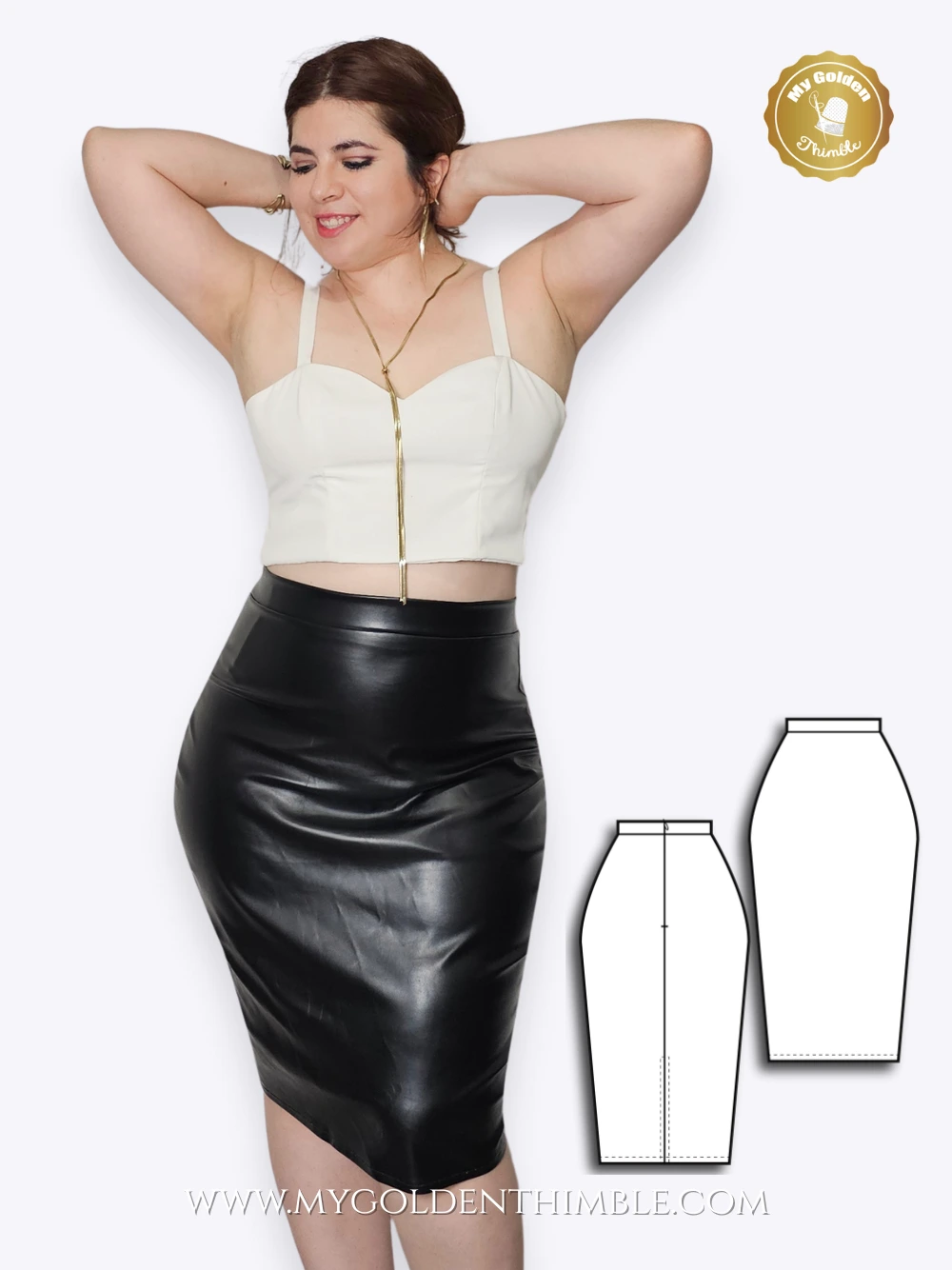
For example, I used it in this rayon corset top because I wanted it to hold its shape while still feeling soft and comfortable to wear.

A traditional corset boning would have made the garment much stiffer than I wanted.
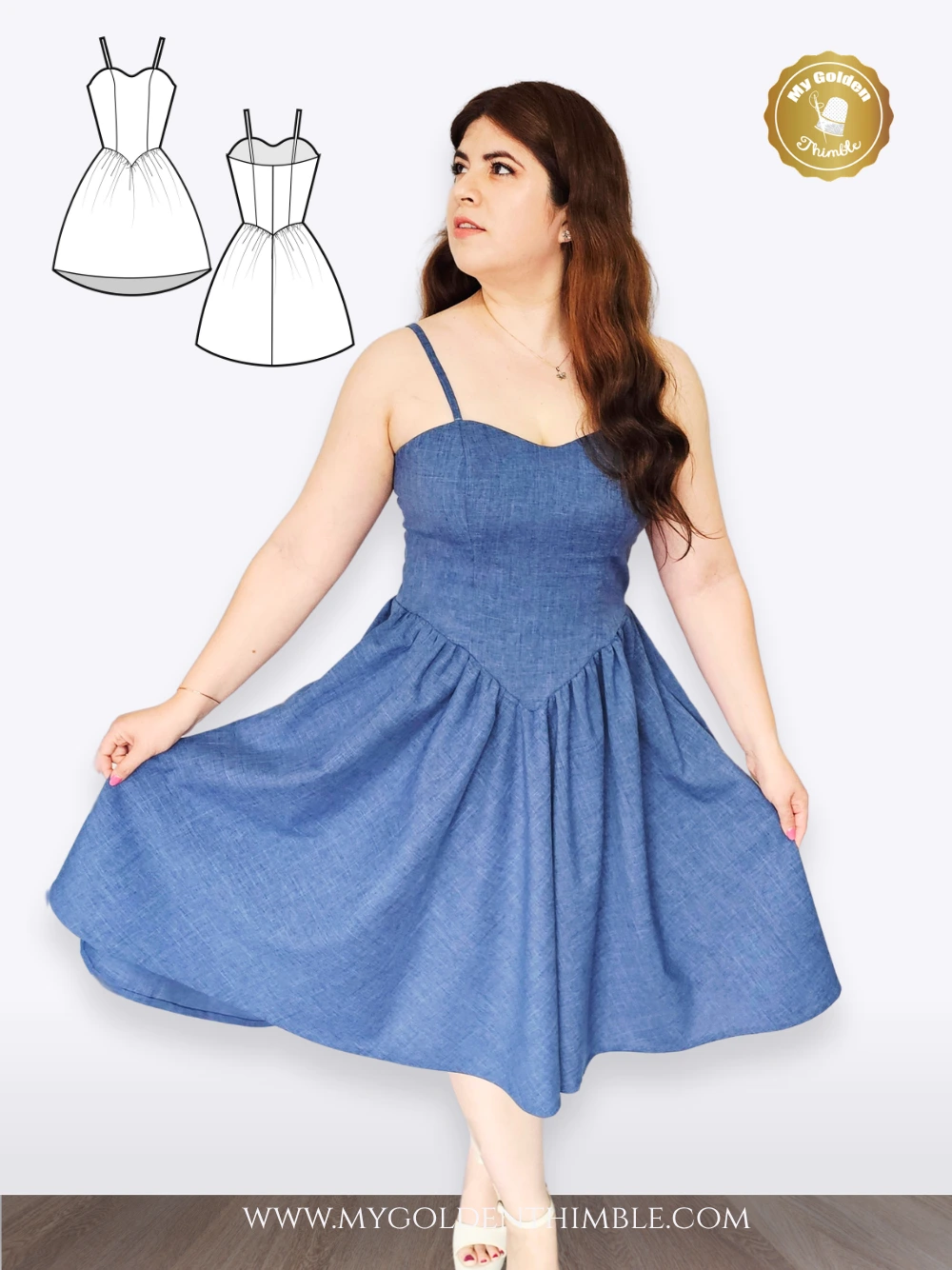
I also used it on this denim corset sewing pattern. I wanted comfortable clothing that maintains its shape on my body.

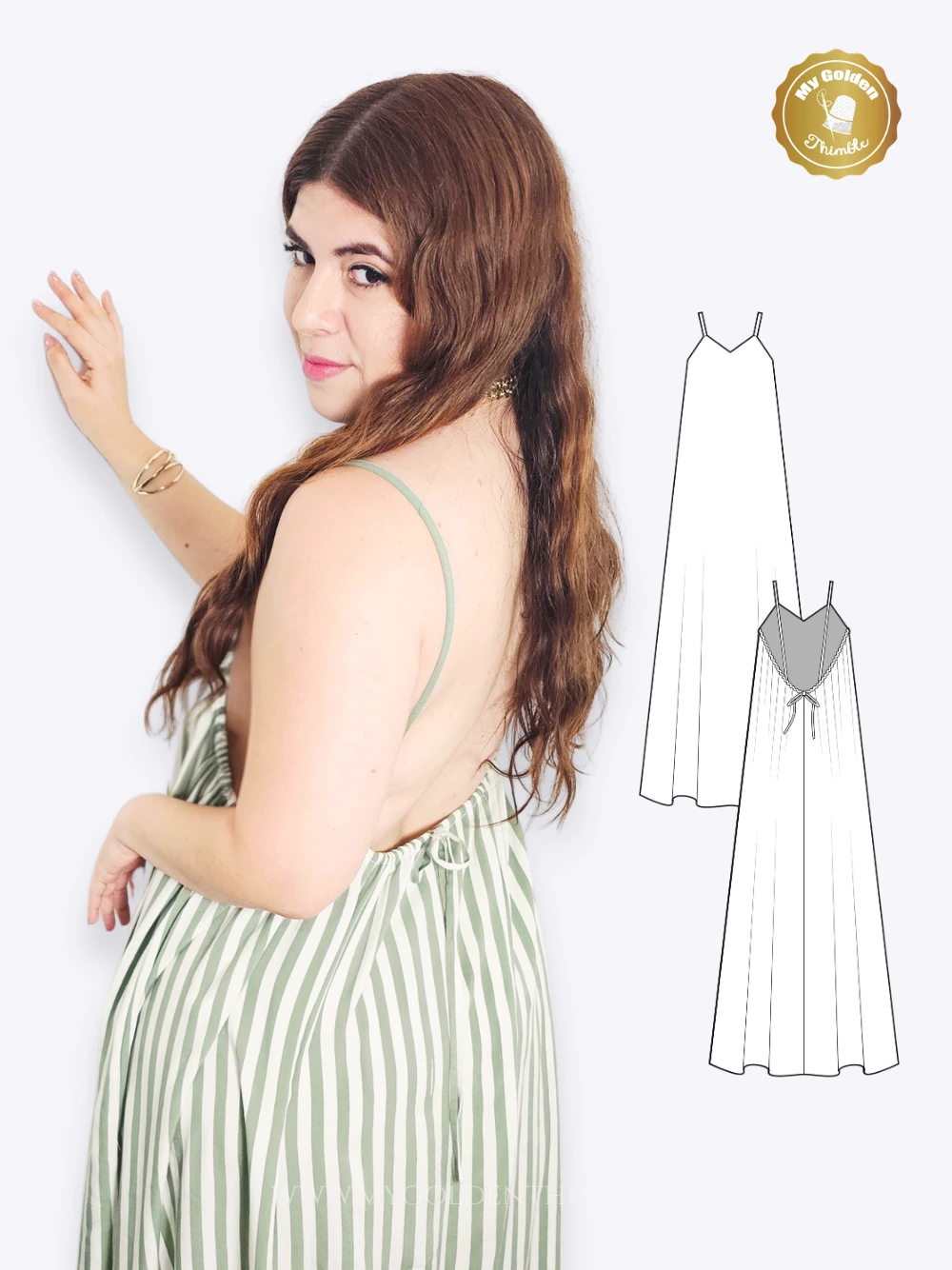
It’s also wonderful for stabilizing specific areas of a garment. I often sew short pieces into the side seams of dresses to help them stay nice and flat while adding just enough support to improve the overall shape.
Spiral Steel Boning
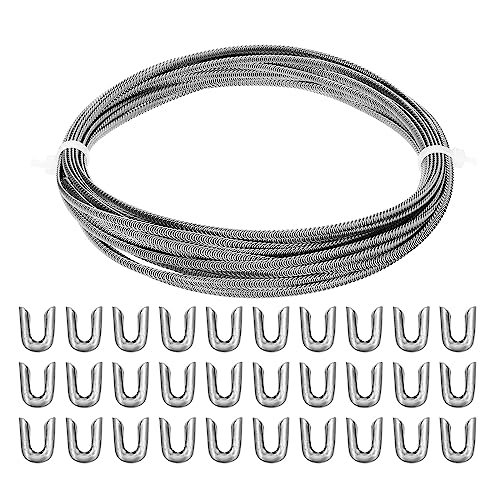
- STURDY YET FLEXIBLE FOR PERFECT FIT – This steel boning measures approx. 10 meters/ 10.9 yards in length, and approx. 5 mm/ 0.91″ in width, the boning tips measure approx. 5 mm/ 0.91″ in width, this boning provides the perfect balance between rigidity and flexibility. It keeps garments upright and well-shaped while offering comfort and resilience.
- DURABLE STAINLESS STEEL MATERIAL – The dress boning is made of 304 stainless steel, ensuring resistance to oxidation and preventing rust. It is a reliable choice for long-lasting use.
- EXCELLENT ELASTICITY AND QUICK RECOVERY -This metal corset boning features high elasticity and fast rebound, maintaining its original shape without deformation. It provides excellent support and flexibility for various garments.
If I want great structure but I don’t want to feel trapped inside my garment, spiral steel boning is usually my first choice. It’s one of the most popular bonings for corsets because it gives amazing support while still allowing you to move comfortably.
It gives amazing support, but it doesn’t feel like you’re wearing a cardboard box.

Characteristics
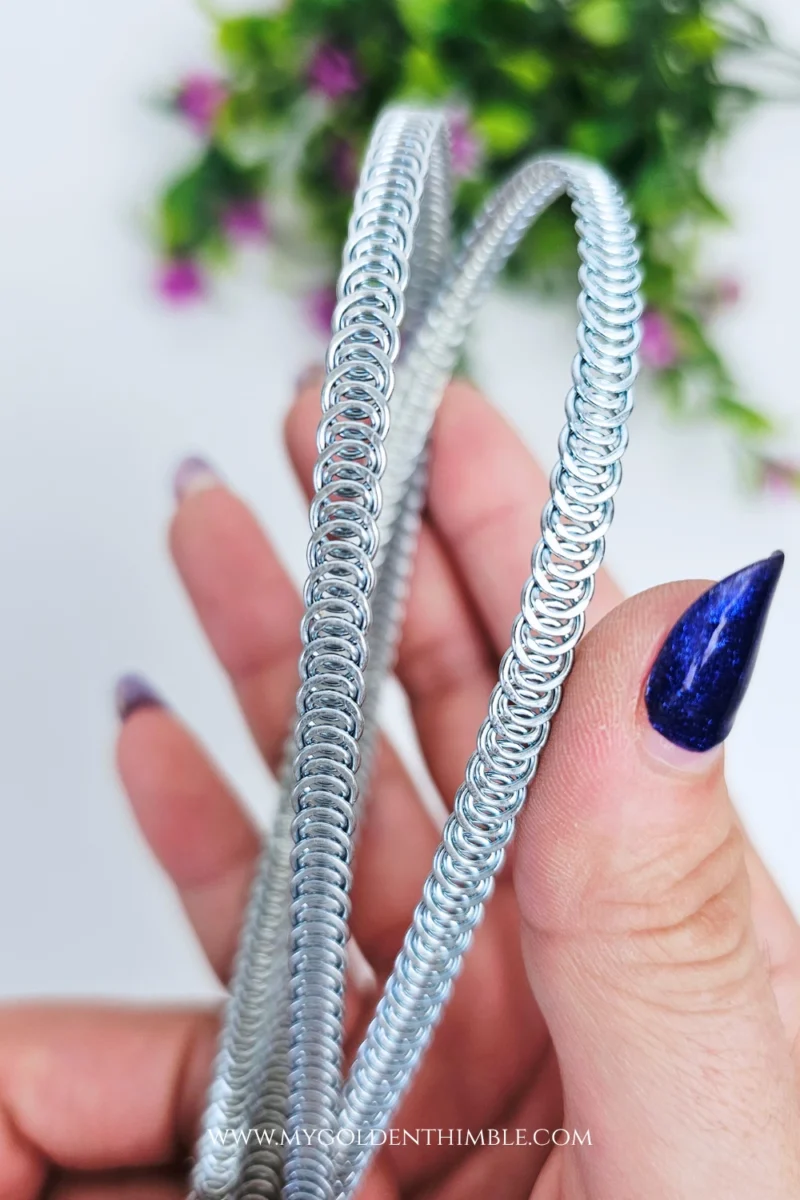
Spiral steel boning is made from tiny strands of hardened steel woven together into a spiral shape. That’s what gives it its flexibility. Unlike flat steel boning, it can bend in multiple directions, which makes it perfect for curved boning channels, princess seams, and any design with lots of curves.
It usually comes in pre-cut lengths, so if you need a custom size, you’ll have to cut it yourself. It’s definitely doable, but don’t expect to grab your craft scissors like you would with plastic boning.
You’ll need specialized wire cutters, and don’t forget to add metal tips to the ends afterward.
Otherwise, those little steel wires will eventually find their way through your fabric… and that’s never a fun surprise.
Pros
My favorite thing about spiral steel boning is how well it balances support and flexibility. It gives your garment beautiful structure, but it also bends as you move, making it much more comfortable to wear than you might expect.
Another thing I really like is how thin it is. Remember how I mentioned that plastic boning is a little thicker? Well, that’s much less of a concern here. You can add plenty of support without adding much bulk to your seams.
It’s also extremely durable, so once it’s inside your garment, it’s there to stay. And yes, it’s waterproof, so you can wash your garment without worrying about ruining the boning.

Cons
Between cutting it to size and adding the metal tips, there are a few extra steps compared to plastic boning.
The other thing to keep in mind is the weight. Steel is heavier than plastic, and while one or two pieces won’t make much of a difference. Those grams start adding up when your project uses lots of boning.
That usually isn’t a problem for corsets. But I probably wouldn’t use spiral steel boning in a lightweight blouse or dress. The extra weight can pull delicate fabrics down and change the way the garment hangs.
Best Uses
I love using spiral steel boning for corsets, corset tops, bridal gowns, and formal dresses. That’s where I want the garment to have plenty of support while still feeling comfortable to wear.
Here I used two bones per seam on the Rose Corset sewing pattern.

If I’m deciding between plastic boning and spiral steel boning, I usually ask myself how structured I want the garment to be. If I need maximum flexibility with excellent support, spiral steel boning is almost always the one I choose.
Other Types of Boning
While plastic boning, rigiline boning, and spiral steel boning are the ones I use the most, they aren’t the only options you’ll find. You can also find them with different names like:
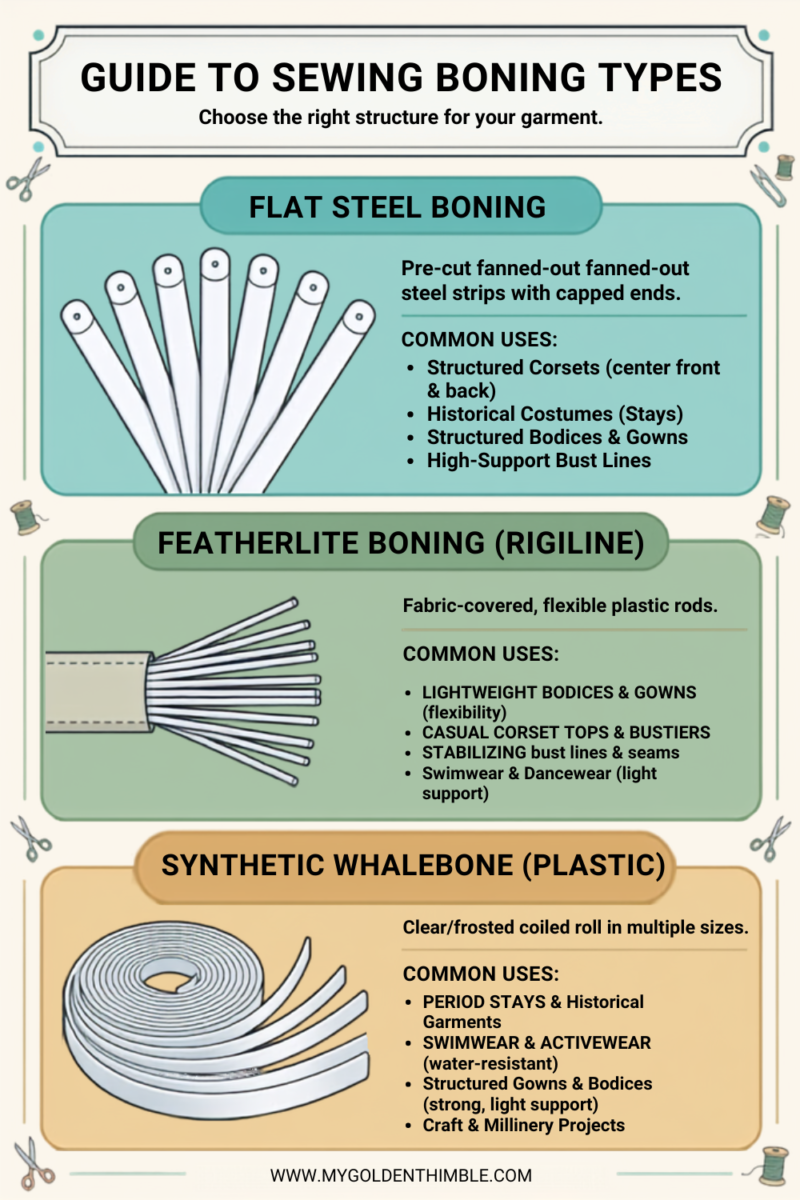
Flat steel boning is more rigid than spiral steel boning, bending only forward and backward. It’s typically used in the center front and back of corsets to maintain a straight shape.
Synthetic whalebone is a modern alternative to traditional whalebone, popular for historical garments and stays. It balances flexibility and support while being washable and easier to source.
Featherlite boning is a softer, lighter alternative to plastic boning, commonly used in lingerie, dancewear, and lightweight garments for minimal support.
Final Thoughts
Choosing between the different types of boning can feel a little overwhelming at first, but I promise it’s much simpler than it seems. Once you understand how each one behaves, picking the right boning becomes just another part of planning your sewing project.
If there’s one thing I’d love for you to take away from this guide, it’s that there isn’t a single “best” boning for every garment. The best choice will always depend on how much structure you need, how much flexibility you want, and what fabric you’re working with.

Where to buy them ?
I just updated the links for shopping the boning!