If you’re looking for a simple way to dress up your table for Valentine’s Day without buying new décor, this Round Scalloped Placemats Sewing Pattern is such a fun place to start. A handmade placemat instantly makes any meal feel more special, and this one is designed to be both beginner-friendly and creative enough to let you play with your sewing machine.
In this tutorial, I’ll show you how to sew a round, scalloped placemat for Valentine’s Day, using decorative stitches to turn a practical project into something truly eye-catching.
Instead of keeping things plain, we’ll use decorative stitching as part of the design, letting the stitches become the star of the placemat rather than just a finishing detail.

NOTE: This post contains affiliate links, which means that if you make a purchase using one of the links in this article, I may earn a commission at no extra cost to you (To know more about this, click here.)
About This Sewing Project
I originally designed this Round Scalloped Placemats Sewing Pattern to decorate my table for Valentine’s Day. I wanted something handmade, soft, and a little extra special without being complicated or time-consuming. But once I finished the first set, it quickly became obvious that this pattern wasn’t just for one holiday.

By simply changing the fabric colors, prints, or thread, these placemats can work for just about any occasion.
These placemats will be amazing for your Galentine’s Day Craft Party with your friends.
Soft pinks and reds are perfect for Valentine’s Day, but neutral linens look beautiful for everyday meals, bright florals are great for spring and summer, and cozy tones make them perfect for fall or holiday tables.
The shape stays the same, but the vibe completely changes.

For this tutorial, I’ll be sharing a free sewing pattern so you can jump right in. If you prefer to customize your placemats, I’ll also show you how to draft your own circle in any size, which makes this pattern incredibly flexible.
On top of that, I’ll walk you step by step through creating a smooth, polished scalloped edge, so your placemats look clean and professional every time.
Materials & Fabric Suggestions

Choosing the right materials for this Round Scalloped Placemats Sewing Pattern makes a big difference, especially since placemats need to be easy to wash, durable, and practical for everyday use.
Fabric Choices


For placemats, I always recommend woven cotton fabrics that can handle frequent washing and still look good over time. Some great options include:
- Cotton poplin
- Quilting cotton
- Cotton twill
- Linen or linen blends
All of these fabrics are machine washable, which is a must for placemats, and they’re sturdy enough to keep the scalloped edge looking crisp after multiple uses.
Tools & Supplies
Here’s what you’ll need to make your placemats:
- Round Scalloped Placemat Sewing Pattern
You can grab the free pattern inside My Golden Thimble Sewing Club, which is our official Facebook group. I’ll link it directly so you can download it easily. - Fabric of your choice
- Thread: You can use a matching thread for a subtle look or a contrasting color to really show off your decorative stitches.
- Cutting mat
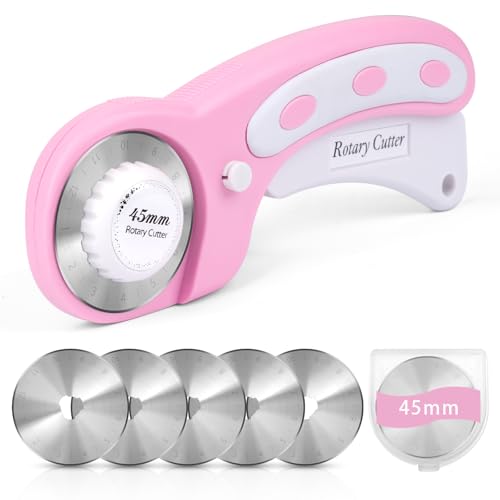
- Rotary cutter
- Pins

Marking tool
I’m using soap to mark my fabric because it’s gentle, easy to see, and washes out effortlessly.
Tutorial: How to Sew a Round Scalloped Placemat

This project may look fancy, but it’s actually very approachable once you break it down step by step. The key to a beautiful scalloped placemat is marking accurately, sewing slowly, and letting the decorative stitch do the work for you.
Step 1: Download and Assemble the Free Sewing Pattern
To get started, download the free Round Scalloped Placemats Sewing Pattern from the files section of My Golden Thimble Sewing Club, which is our official Facebook group. This is where we share sewing resources, ask questions, give advice, and help each other with everything sewing-related.
If you’re not a member yet, make sure to request to join the group first. Once you’re inside:
- Go to the Files section
- If you don’t see it right away, use the magnifying glass to search for the name of this pattern
- A post will pop up with the download link
After downloading, assemble the pattern according to the instructions.
Step 2: Prepare the Pattern and Fabric
For this pattern, the circle is designed to be cut from a folded sheet of paper, giving you a perfectly symmetrical full circle once opened.
Now for the fabric:
Place two layers of fabric with the wrong sides together. Then, cut a square of fabric that is larger than the finished circle

At this point, do not cut the circle yet. The extra fabric will make sewing the scalloped edge much easier and cleaner later on—you’ll see why in a moment.
Using your marking tool (I’m using soap), carefully trace the circle shape exactly as shown on the pattern onto the top fabric layer.

Once marked, pin both fabric layers together securely, making sure nothing shifts.
Step 3: Set Up Your Sewing Machine for Decorative Stitches
This scalloped edge is created using a decorative stitch, which is what gives this placemat its charm.
If decorative stitches feel intimidating, don’t worry—I have a full, in-depth post all about how to use decorative stitches on your sewing machine, including my best tips for clean, professional-looking results. I highly recommend checking that out before or during this step if you want extra guidance.

Choose a scallop-style decorative stitch. Use a larger stitch length, which makes trimming the edge much easier later.
Swap your presser foot for a monogramming or open-toe foot so you can clearly see where you’re stitching.
Step 4: Sew the Scalloped Edge
Take your pinned fabric to the machine.
The most important thing to remember here is positioning. Align the marked circle line directly in the center of the presser foot. This ensures the scallops are evenly distributed, and your circle stays smooth and balanced.

Sew slowly and intentionally. There’s absolutely no rush here. Going too fast can easily result in a crooked circle, and nobody wants that.
As you approach the end of the circle, pay close attention to where your stitch started.

Try to end the seam exactly on top of the starting point. Most of the time, the scallops won’t line up perfectly on the first try, and that’s completely normal. Learning how to distribute the remaining space evenly takes practice, so don’t stress about perfection.
Step 5: Trim the Placemat
Once the full circle is stitched, grab your scissors and carefully trim away the excess fabric.

When you’re cutting, try to get as close to the seam as possible, leaving about ⅛ inch of fabric all around. Just be sure to take your time and avoid snipping into any of the stitches.
Take your time here. This step makes a huge difference in the final look.
Step 6: Finish the Raw Edge (Optional)
At this point, your placemat is technically done, and you can absolutely leave it as is.

If you want extra durability, especially when working with polyester blends like the poplin I’m using, you can finish the raw edge using one of these methods:
- Carefully melt the edge with fire
This is something I personally do, but only with a lot of caution. Keep the flame far enough away to gently melt the fabric without burning it.
If you’re not experienced working with fire and fabric, I strongly recommend skipping this step, as overheating the stitches can cause them to pop and ruin the edge. - Use a fray-prevention solution
This is a great alternative if you want a safer option.
And That’s It!

See? It’s much easier than it looks. Once you finish one placemat, the rest come together quickly—and before you know it, you’ll be planning matching napkins and setting the table for every occasion you can think of.
Change the fabrics, play with thread colors, experiment with decorative stitches, and most importantly, have fun with it. This pattern is meant to be used again and again.